
Fuel Tax Bonds, Sales Tax Bonds, and Highway Use Tax Bonds: Who Needs Them?
December 31, 2025
Navigating Freight Insurance After a Government Shutdown
March 10, 2026The FEMA STOS (Standard Tender of Service) program connects freight brokers and forwarders with vital disaster relief transportation opportunities. If you’re interested in transporting cargo for FEMA in 2026, it’s essential to understand the Transportation Service Provider (TSP) Onboarding process and the STOS Program requirements.
This guide outlines key information about the FEMA STOS Program and TSP Onboarding, including detailed information about eligibility and documentation to help you successfully navigate this year’s registration process. We’ve included helpful tips that can help you avoid delays and onboard more efficiently.
Who Can Participate in the FEMA STOS Program?
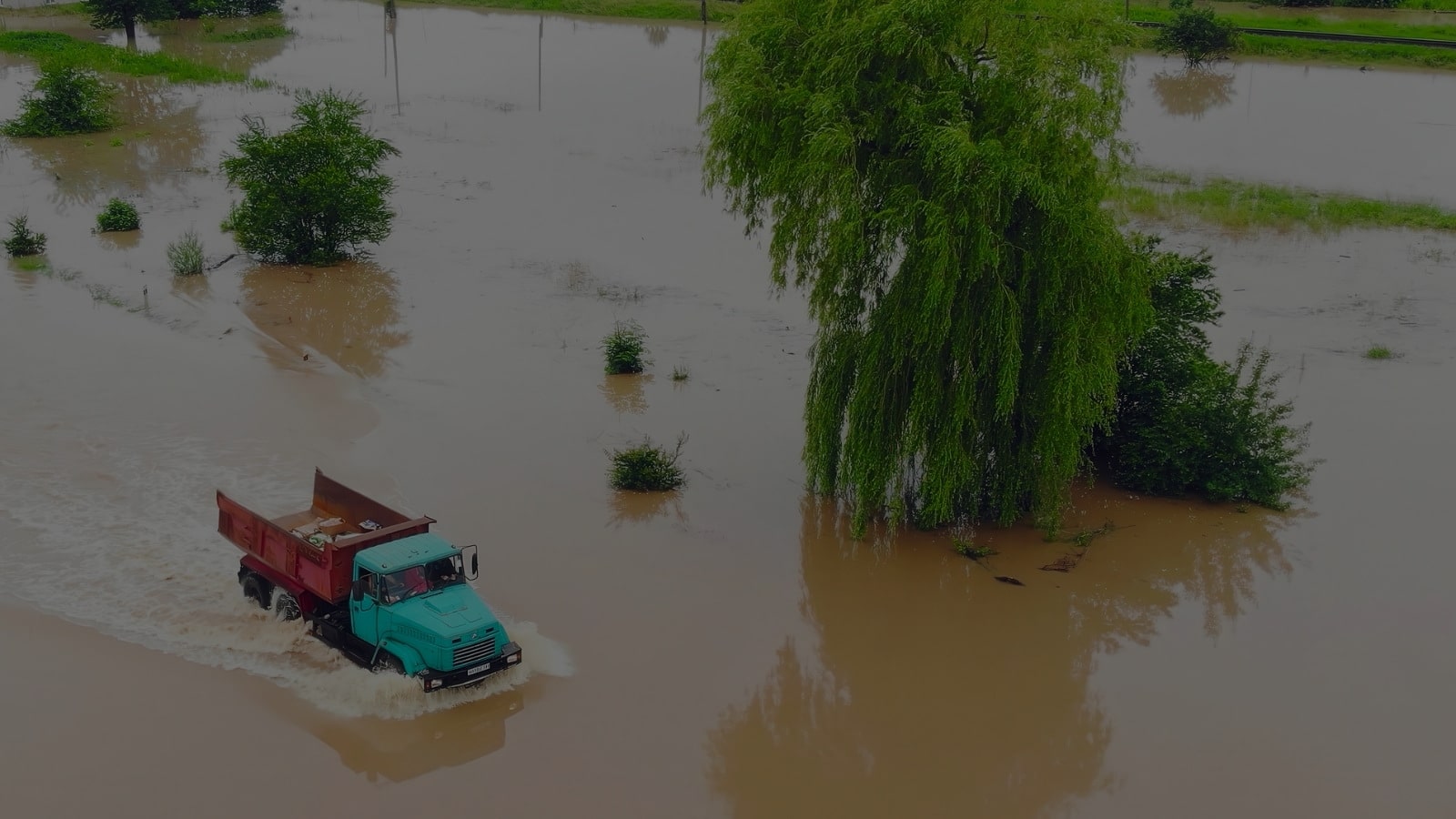
Transportation Service Providers (TSPs) include freight brokers, forwarders, and carriers who partner with FEMA to support emergency response operations. The FEMA Standard Tender of Service program enables TSPs to contract with FEMA and move freight during hurricanes, floods, wildfires, and other disasters.
All applicants need an active SAM.gov registration and SCAC code. New TSPs should register as early as possible and returning TSPs should confirm their renewals are all up-to-date. We’ve provided an in-depth explanation in this blog! Click here to skip ahead to that section.
Registration is Required Every Year
All transportation providers must complete the TSP application process every year to remain active. Even if you were approved in 2025, you must re-apply for 2026 by the March 27 deadline in order to qualify. The FEMA STOS Program requires active TSPs to renew their status.
Why FEMA TSP Registration Is Complex
Registering as a TSP follows strict deadlines and requires all forms and documents to be submitted in the right order, at the right time, and in the right format.
This is not a simple, single-step application; it involves navigating government systems, securing insurance verifications, and managing multiple supporting documents. The process takes weeks (or longer) to complete, so starting early and working with a knowledgeable industry partner is essential.
Our experienced transportation insurance agents at PFA Transportation Insurance & Surety Services can help. We are familiar with the process and have helped TSPs navigate the steps and requirements for a successful onboard. Reach out to us directly by email info@PFAprotects.com; Phone (800) 595-2615; or Fax (623) 209-2610.
Key 2026 TSP Registration Deadlines
Meeting FEMA’s onboarding deadlines is non-negotiable.
- Registration window opens: February 2, 2026
- Virtual Industry Day: February 2, 2026 at 1:30 p.m. EST
- New TSP application deadline: February 20, 2026*
- FEMA’s suggested application deadline for new TSPs is February 18, 2026
- Final documentation deadline: March 27, 2026
Tip 1: If this is your first time onboarding, you’ll need to register on SAM.gov first. FEMA will only review registrations with active SAM registration. This can take 15 days or longer and FEMA has no control over the SAM registration process.
Tip 2: Smart TSPs begin preparing as early as possible, often weeks before the registration window opens. Starting the process when enrollment opens leaves little room for delays caused by government verification or incomplete documentation.
TSP Onboarding for First-Time Registrations: Step-by-Step
The TSP application process follows a logical, step-by-step sequence, although several steps must occur simultaneously.
Preparation and Research
Start by visiting the FEMA Transportation Programs website. Download the latest STOS policy and the TSP Registration Form. Confirm your company has the appropriate operating authority for the freight modes you plan to provide.
Step 1: Start with SAM and SCAC Registration
Initiate or renew your SAM.gov registration early and plan ahead for possible delays. Expect a wait time of 15 days or longer to finalize your SAM registration. In the meantime, make sure to secure your SCAC through the NMFTA if you don’t have one already. It should only take 2-3 days to get your digital SCAC, but days to weeks if you’re requesting a mailed certificate.
Step 2: Coordinate Insurance Policy and Submission Dates
Double check your cargo insurance if you haven’t already. Make sure you have adequate coverage for the modes of transportation you plan to provide ($300,000 minimum). If you are working with an insurance provider that does not specialize in the transportation industry like PFA Transportation Insurance & Surety Services, you may need to educate your agent on document format and submission instructions.
PFA works exclusively with transportation professionals. We’ve helped thousands of brokers and forwarders during TSP Onboarding in our 28 years of business. Our team can help you secure the right cargo insurance policy for your business and get your ACORD to FEMA in the correct format.
Step 3: Attend TSP Enrollment Events
Open enrollment begins February 2, 2026. Attend the Virtual Industry Day (click here to register) for a comprehensive overview, and join the Onboarding Q&A on February 9 to get your questions answered. We’ve also provided some common questions and answers below
Step 4: Complete and Review Application
Assemble all TSP forms and supporting documents, double-checking for consistency and accuracy.
- Valid SCAC assignment letter issued by the NMFTA
- Signed and dated FEMA Transportation Service Provider (TSP) Agreement
- Proof of TTHU eligibility (if providing TTHU services)
- You must have LCSMS access before your insurance provider submits your ACORD. FEMA will not process your ACORD if you don’t have an account.
Step 5: Strategic Submission
All documents must be submitted by March 27, 2026. There are no exceptions.
For New TSPs: Submit your TSP registration and LCSMS-C access control form by February 20 at the latest, aiming for February 16–18 for a buffer before FEMA’s official deadline. It takes about 14 days to get an LCSMS account, but once you have access you can start submitting required documents.
For ALL TSPs: Log into LCSMS and submit your documents as soon as they are ready. Once you submit everything through FEMA on the LCSMS, your insurance company should submit the Certificate of Insurance on an ACORD form on your behalf.
Step 6: Monitor and Respond
Log in to your LCSMS account periodically to confirm all required documents have been uploaded without any issues. Form review times vary based on workload and disaster activity, so keep your contact information up to date and respond quickly. If there are issues with the ACORD form your insurance provider submitted, FEMA will reach out directly to you, not the provider.
Avoid reaching out to FEMA about your submitted forms until you receive official approval. The approval email will cover all the next steps in onboarding.
Dive Deeper: Supporting Documents Requirements for TSP Application
One of the first hurdles in the TSP registration process is understanding the full range of forms, documentation, and account setup needed to get started. The TSP application is not a single document, but rather a careful coordination between several federal systems.
All supporting documents must be meticulously accurate and consistent across platforms. Missing or inconsistent documentation can lead to delays or outright rejection, regardless of how early you submit your application.
Essential TSP Forms and Documentation
What TSP Forms Are Required?
Your complete TSP application will include these documents and business registrations:
- Active SAM.gov registration (Do this first!)
- Valid SCAC assignment letter issued by the NMFTA
- Completed TSP Registration Form
- Completed LSCMS-C Access Control Form (Only required for new TSPs. If you were approved in 2025, you will already have an active LSCMS-C users on file)
- Signed and dated FEMA Transportation Service Provider Agreement
- Proof of Transportable Temporary Housing Unit Eligibility (Only required if you will be providing TTHU services)
- Certificate of Insurance on an ACORD form sent directly from your provider
System for Award Management (SAM.gov) Registration
Before any other step, you must confirm active registration with the System for Award Management on SAM.gov. This is the federal government’s primary contractor database. Registering on SAM is free, but can take 15 days or longer for new users.
TSPs must register under the same business name and eligible U.S. address that appears on all supporting documents for TSP Onboarding. Your SAM Registration must be registered to receive “All Awards.”
Active SAM.gov Registration is Required for STOS Program Consideration
FEMA will not process TSP applications from providers with expired or inconsistent SAM.gov registration. SAM Registration is a common bottleneck for new TSPs. Although FEMA TSP onboarding officially begins on February 2, those who plan to register should have their SAM registration in place or pending much sooner.
FEMA has no control over new user registration timeframes on SAM. Processing time can range from two to six weeks, especially during peak seasons.
Business Information on Your SAM Registration Must Be Consistent With All Other Documents
Your SAM registration is used to confirm business details, including how many consecutive years you’ve been in operation. TSP applicants must be in business five consecutive years prior to the registration deadline in order to be eligible for the FEMA STOS Program. Ensure your legal business name, address, and entity structure are identical across all platforms to avoid costly verification delays.
Tip: Even small discrepancies, such as “LLC” versus “L.L.C.” or a missing comma, can create verification holds and significant delays.
Standard Carrier Alpha Code (SCAC) Credential
Securing a Standard Carrier Alpha Code (SCAC) from the National Motor Freight Traffic Association (NMFTA) is required. Online applications take about 2-3 days to process and all SCACs are issued by email. You can request your SCAC certificate on Okta or by emailing the NMFTA.
Once you have your SCAC, make sure to update your insurance provider. They will need to include your SCAC on your ACORD form for FEMA. Having your SCAC set up early is a best practice and will make your actual onboarding submission much smoother.
Failure to have an assigned SCAC by the final deadline means your TSP application will not be approved.
TSP Insurance Requirements and Documentation
Insurance documentation is another area where TSP applicants frequently encounter issues. FEMA requires cargo insurance with a minimum coverage of $300,000 per transportation mode for all TSPs. Your insurance documentation must be submitted directly to FEMA by your insurance provider using one ACORD form.
The ACORD form must include your SCAC code, your exact legal business name as registered in SAM.gov, and clear coverage details for each transportation mode.
TSP Onboarding can be delayed or disqualified if your ACORD form is incomplete or incorrectly formatted.
Choose a Specialized Transportation Insurance Provider to Streamline the Process
PFA Transportation Insurance & Surety Services works exclusively with freight and transportation professionals. We offer specialized insurance programs and higher lines of coverage specifically to address the unique needs of brokers, forwarders, and carriers.
When it comes to the FEMA STOS Program, there is no room for mistakes or delays. While providers with household name recognition may seem like a convenient choice, they don’t bring the deep-seated industry knowledge that comes from exclusively serving the transportation industry for decades.

PFA is Your Partner in TSP Onboarding
PFA Transportation Insurance & Surety Services has been helping brokers with TSP onboarding and other federal contracts for over 25 years. We offer a range of coverage options to help you meet initial and ongoing TSP insurance requirements. Our team has experience preparing and submitting ACORD Certificates of Insurance documents to meet FEMA’s specific requirements, streamlining your final approval decision.
We know the importance of getting the details right and getting them submitted on time. We have what you need. When you need it.
Common TSP Registration Pitfalls to Avoid
There are several common pitfalls that can derail the FEMA TSP registration process. The most damaging mistake is delaying SAM.gov registration, which can block your ability to meet FEMA deadlines altogether. Inconsistent documentation is another major issue; every detail of your business name must match perfectly across SAM.gov, SCAC, insurance coverages, and TSP forms.
Poor follow-up on tracking and documentation for submissions, confirmation numbers, and follow-ups can result in missed opportunities or lost paperwork. Keeping a detailed log is invaluable for resolving issues quickly.
Submitting Proof of Insurance With Multiple Providers
You can use multiple policies to meet FEMA’s cargo insurance requirements, but all policies must be listed on a single ACORD. If your policies are through more than one insurer, you’ll have to coordinate with each of your providers to get a consolidated ACORD certificate. Ultimately, one of your providers will have to agree to compile the separate provider policy information and submit it in the approved format.
TSP Onboarding Frequently Asked Questions (FAQs)
Q: Do freight brokers need a $300,000 cargo insurance policy, or does that only apply to carriers?
A: All TSPs, including brokers, must have a $300,000 cargo insurance policy in place in order to qualify for the FEMA Tender of Service Program. Contingent cargo and cargo liability policies are both accepted.
Q: Can I apply with a policy that only kicks in when I’m transporting FEMA cargo?
A: No, your policy must be active during the entire program year. All TSPs are required to have a cargo insurance policy that meets program requirements both at the time of their application and during the 12-month program. You must maintain active coverage on the policy you apply with.
Q: What should I do if I’m awarded a FEMA load valued over $300,000 and I don’t have enough cargo insurance?
A: It is your responsibility to ensure your insurance policy, or your policy and liquid assets, adequately covers the load’s value. There is no penalty if you refuse FEMA cargo valued over $300k because you don’t have adequate insurance and cannot self-insure. High-value shipments will be indicated on the Bill of Lading (BOL).
Q: Where can I find a list of insurance providers recommended by FEMA for Transportation Service Providers?
A: FEMA does not provide any recommendations on specific insurance providers. FEMA only provides information on policy requirements:
- All TSPs must carry, at minimum, a cargo insurance policy of $300,000 per shipment.
- Cargo policies that meet the $300,000 minimum requirement, but are listed as for FEMA only, must have FEMA listed as the certificate holder on the ACORD form
- Excess cargo policies can be used if they cover the modes of transportation the TSP will provide for FEMA and those modes are listed on the same ACORD form as the main policy.
- The ACORD form for the cargo insurance must list all modes of transportation the TSP will provide for FEMA
- Cargo insurance must be continuously active during the 12-month program.
Q: Does registering guarantee I will get work from FEMA?
A: No. Registration does not guarantee transportation opportunities. FEMA’s needs depend entirely on disaster response requirements. There may be periods of high demand or very few opportunities.
Q: What happens if I lose, cancel, or lower my cargo insurance after I’m approved for the FEMA STOS Program?
A: You must submit updated information in LSCMS. Failure to maintain active, adequate cargo insurance or provide updated documentation will result in immediate suspension from the FEMA Tender of Service Program.
Q: What equipment is required to participate?
A: Requirements vary by service mode, but if you plan to offer any of the following motor freight options, your equipment (or the equipment you are offering to broker) must meet these specifications:
- Truckload (TL): Power tractor with adjustable 5th wheel and trailer.
- Less-Than-Truckload (LTL): Power tractor and box truck with liftgate and trailer.
- Transportable Temporary Housing Unit (TTHU): Power tractor with adjustable 5th wheel.
Q: Can I hire another broker to handle a FEMA contract on my behalf?
A: No, double brokering is strictly prohibited and can result in temporary nonuse, suspension, or debarment.
Q: What happens if one of my carriers ends up brokering a FEMA load to a different carrier without telling me?
A: This is still a violation of FEMA’s strict policy against double brokering. Even if it happens without your knowledge or permission as a broker or forwarder, FEMA has a zero-tolerance policy for double brokering.
It is the responsibility of the broker to ensure freight is handled and delivered by the authorized carrier and not brokered to another party. Vetting carriers can help you prevent double brokering and other liability issues pertinent to maintaining your active TSP status.
Q: What is the claims process if cargo is lost or damaged?
A: The TSP* is liable to FEMA for damages. If a third party is at fault, the TSP may seek recovery from them. If insurance does not fully cover damages, the TSP must cover the difference. FEMA will only communicate directly with the TSP, not the insurer. Failure to comply with claims requirements may lead to suspension or debarment.
*TSP is used by FEMA to refer to all Transportation Service Providers: carriers, forwarders, brokers, and shippers. While carriers are usually liable for cargo damage or loss, unique situations can affect who is ultimately financially responsible.
Brokers, forwarders, and shippers can mitigate risk by maintaining appropriate insurance coverage. Errors and omissions insurance, contingent cargo liability insurance, cybersecurity liability insurance, and general liability are common lines of coverage used to protect transportation businesses.
Contact PFA Today About Cargo Insurance for TSP Onboarding
Contact PFA Online
Partnering with a specialized transportation insurance provider like PFA Transportation Insurance & Surety Services can streamline TSP onboarding and help you stay compliant all year long. We understand FEMA’s specific requirements, help you secure adequate coverage, and ensure your required documentation is submitted correctly and on time.
Call us at (800) 595-2615 or contact us online to get started with a free quote on cargo insurance.